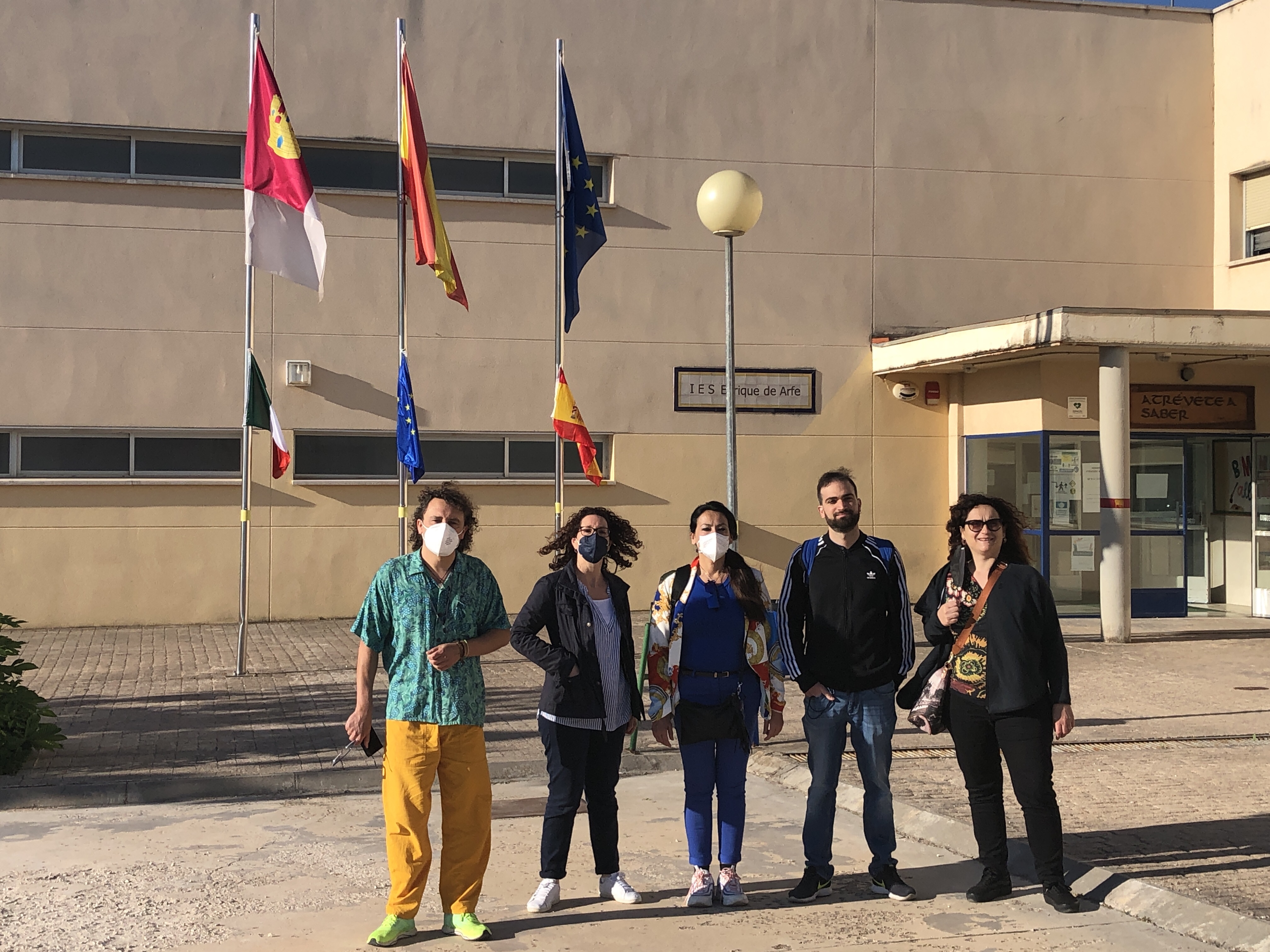
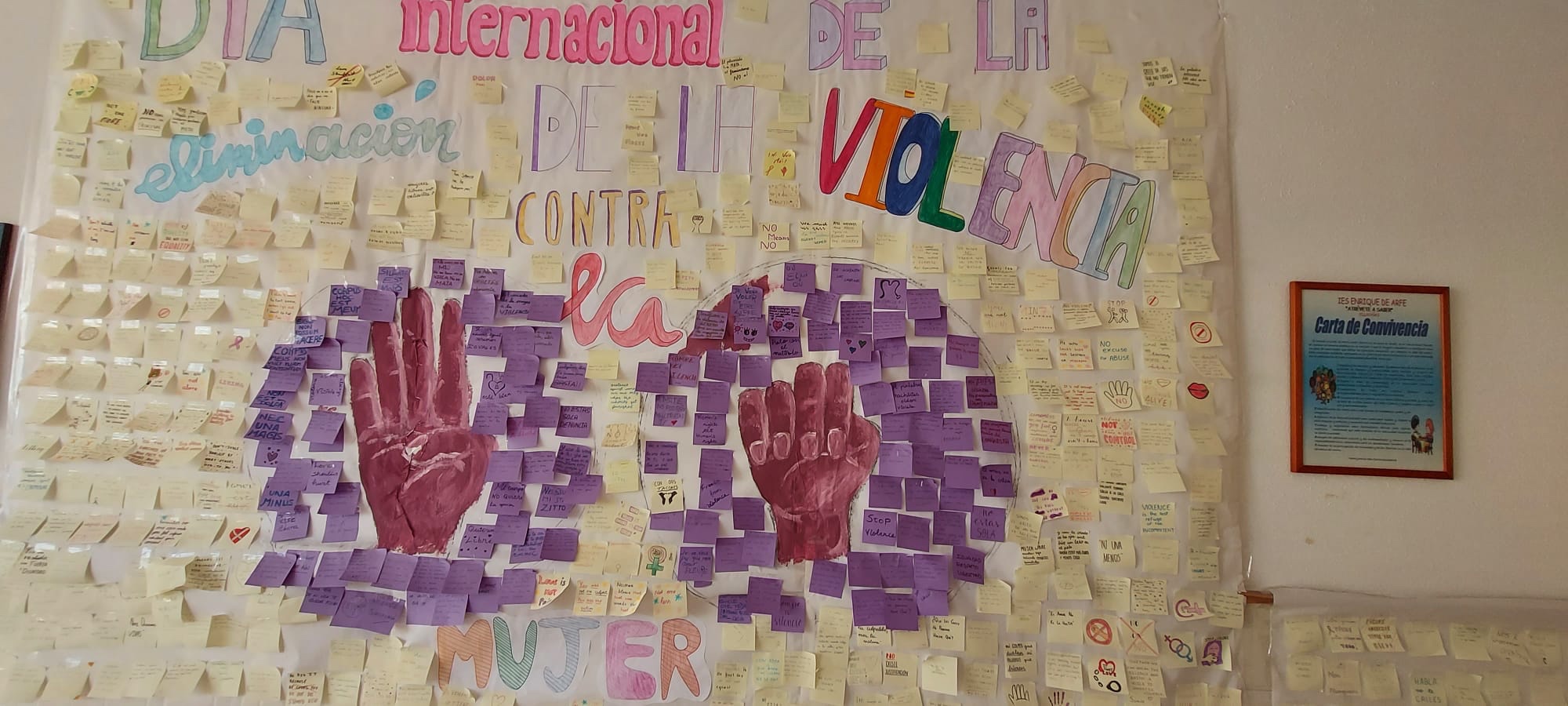
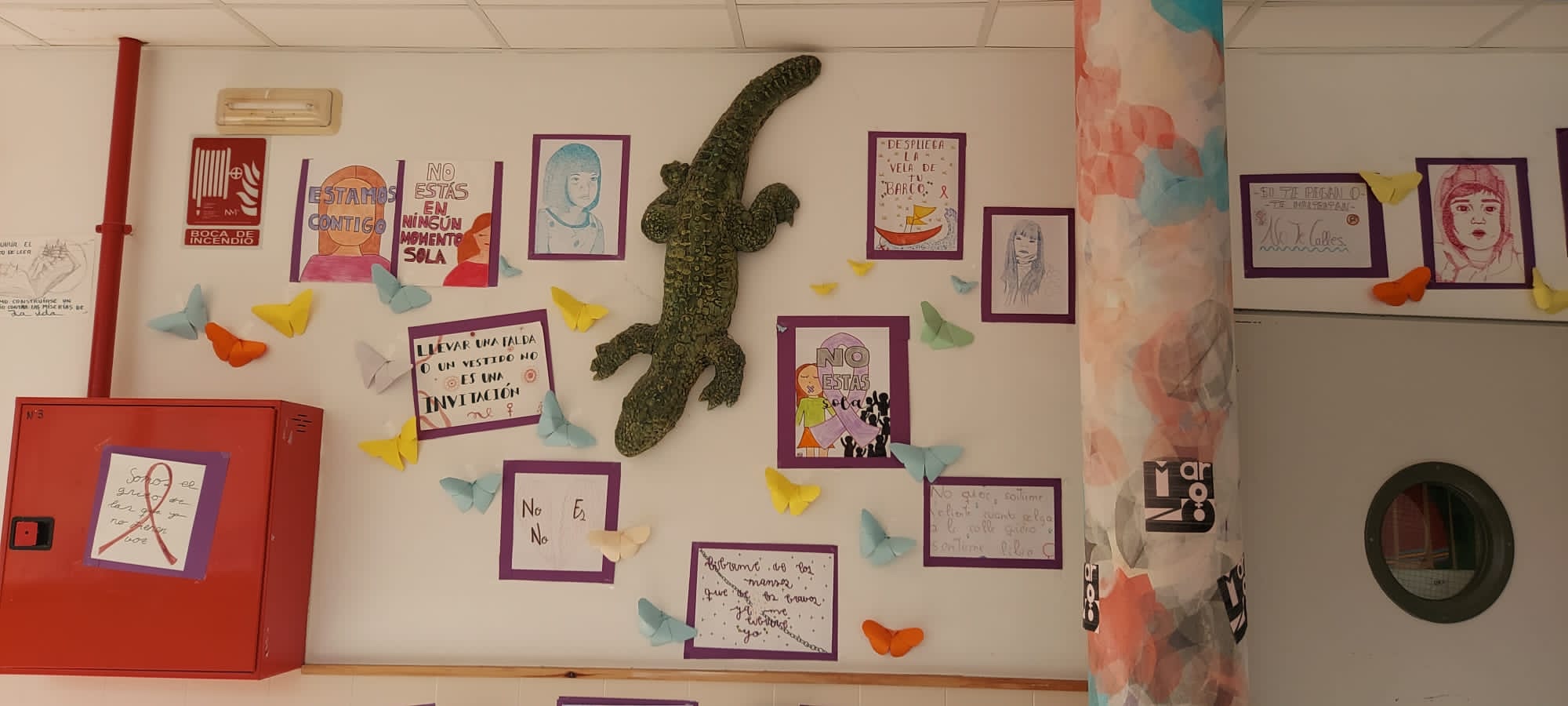
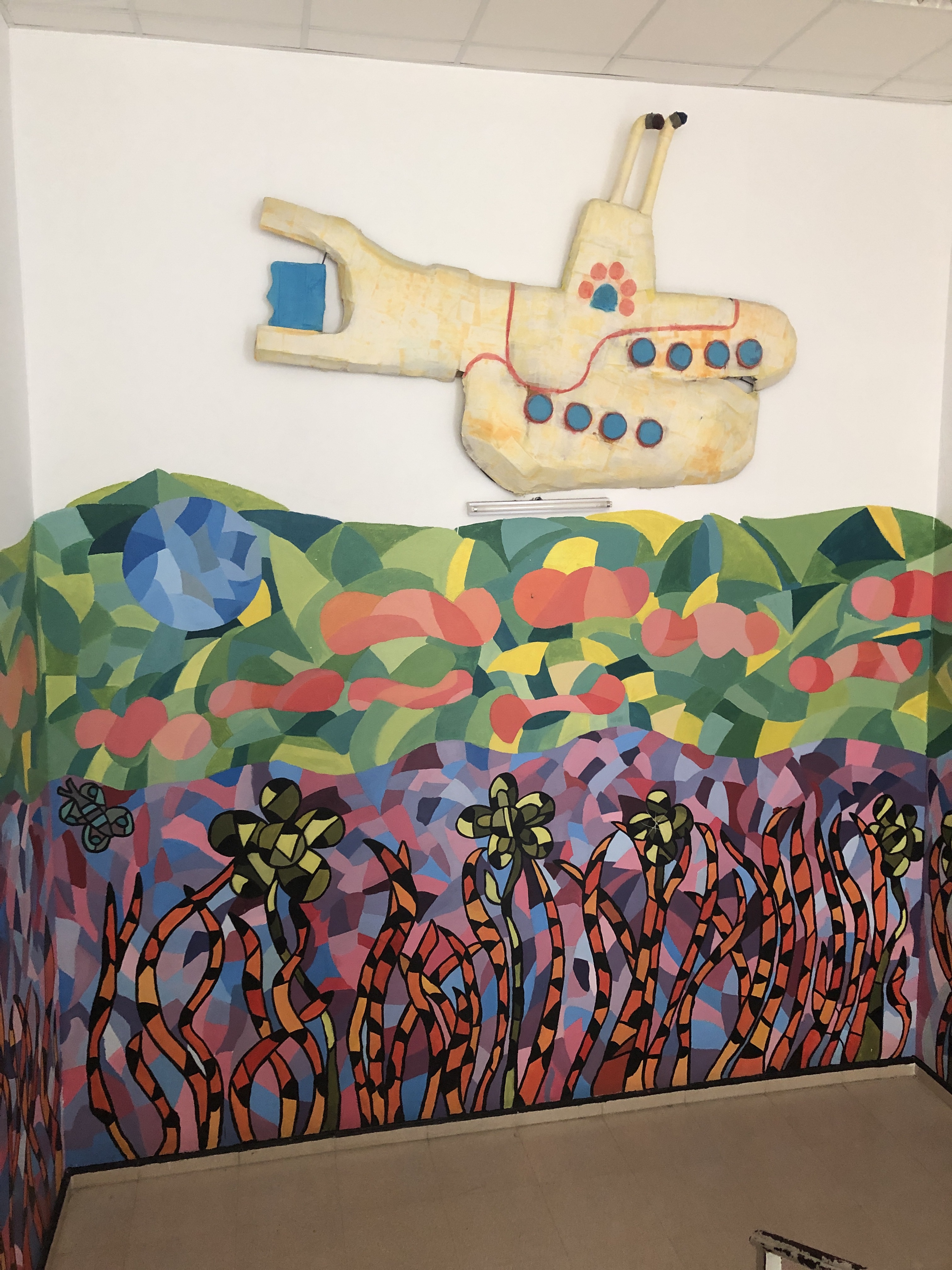
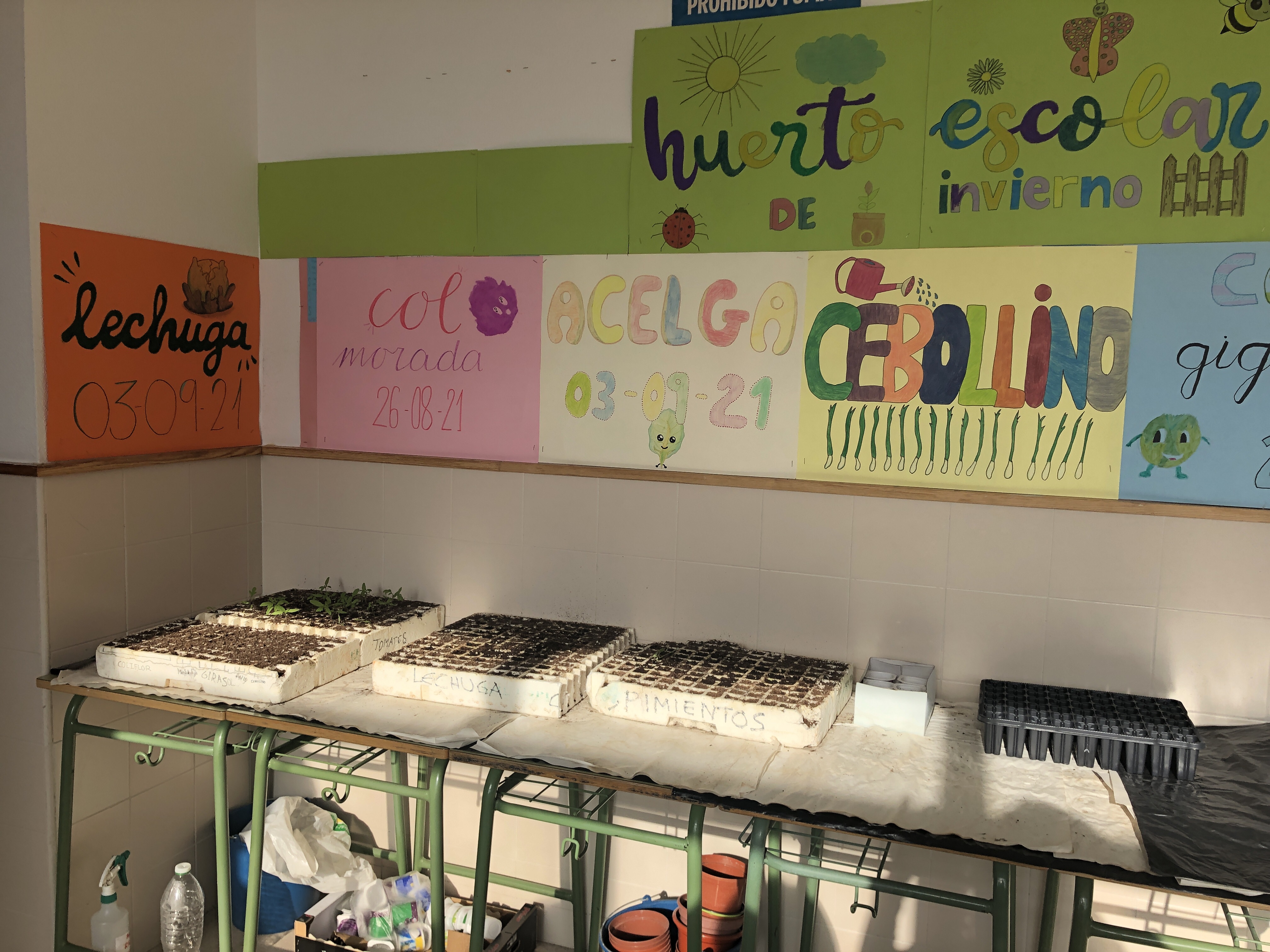
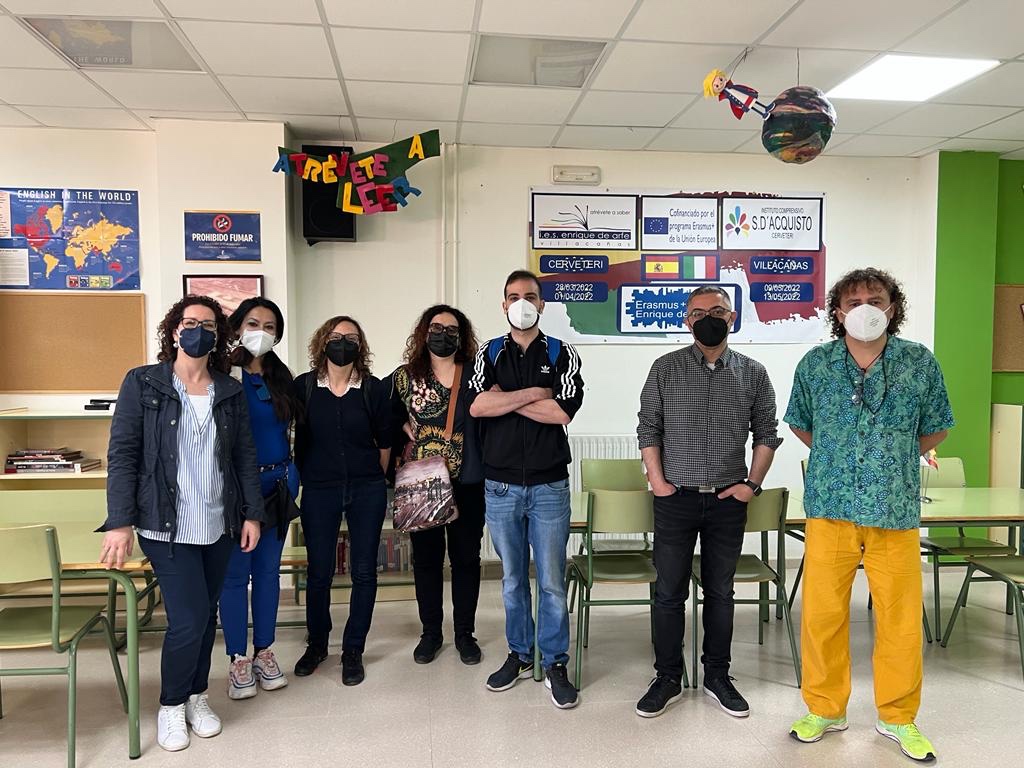
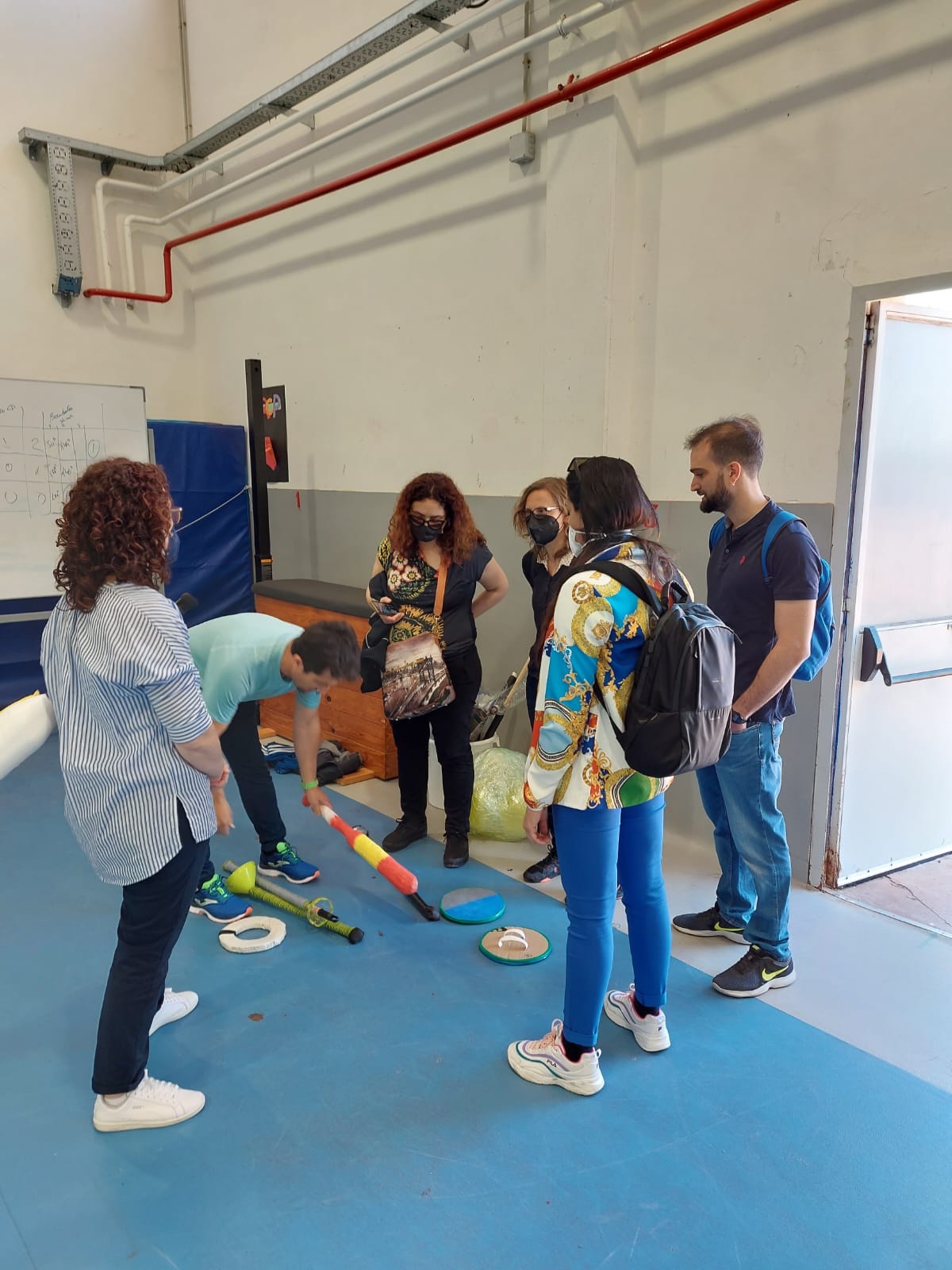
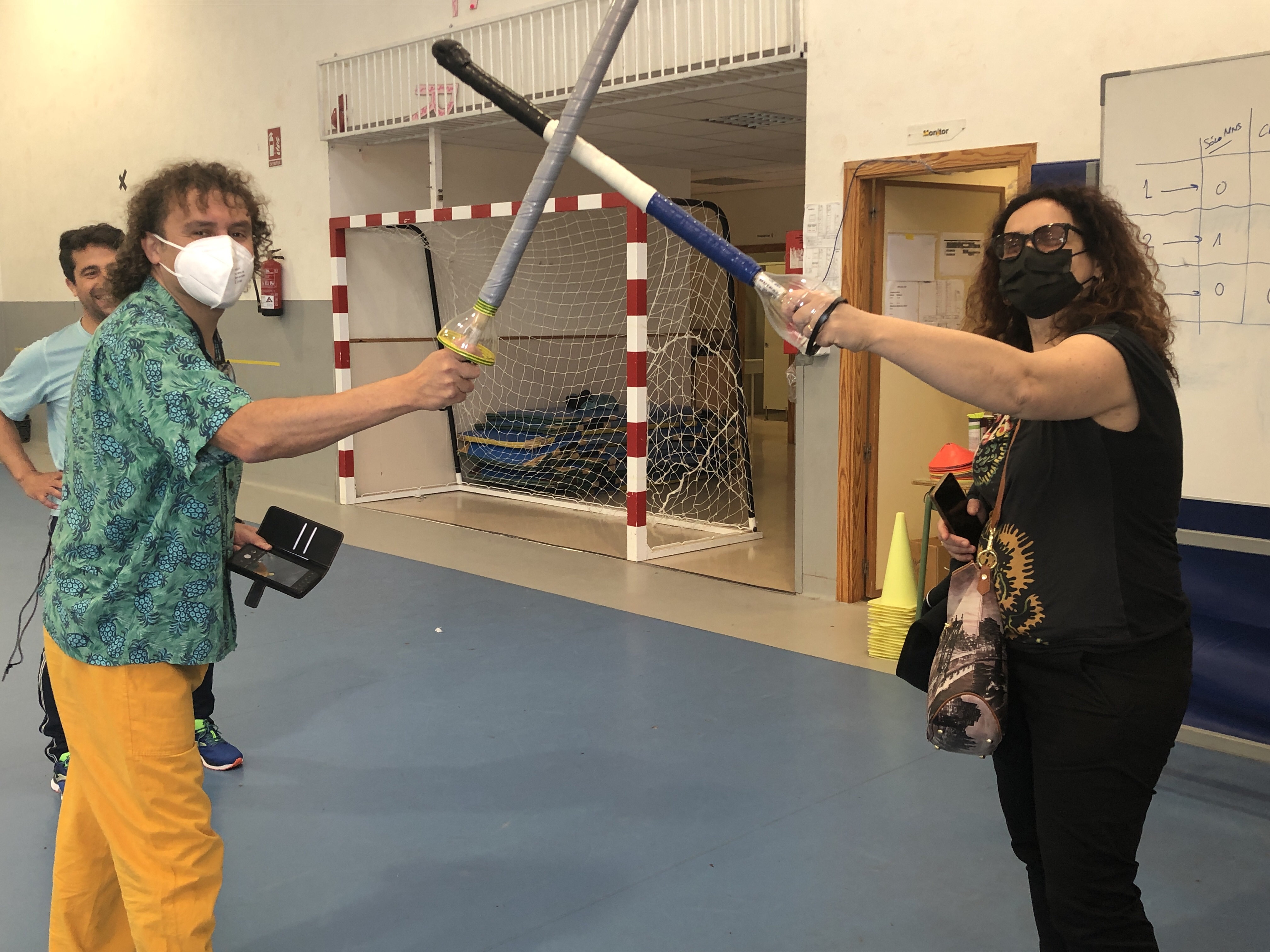
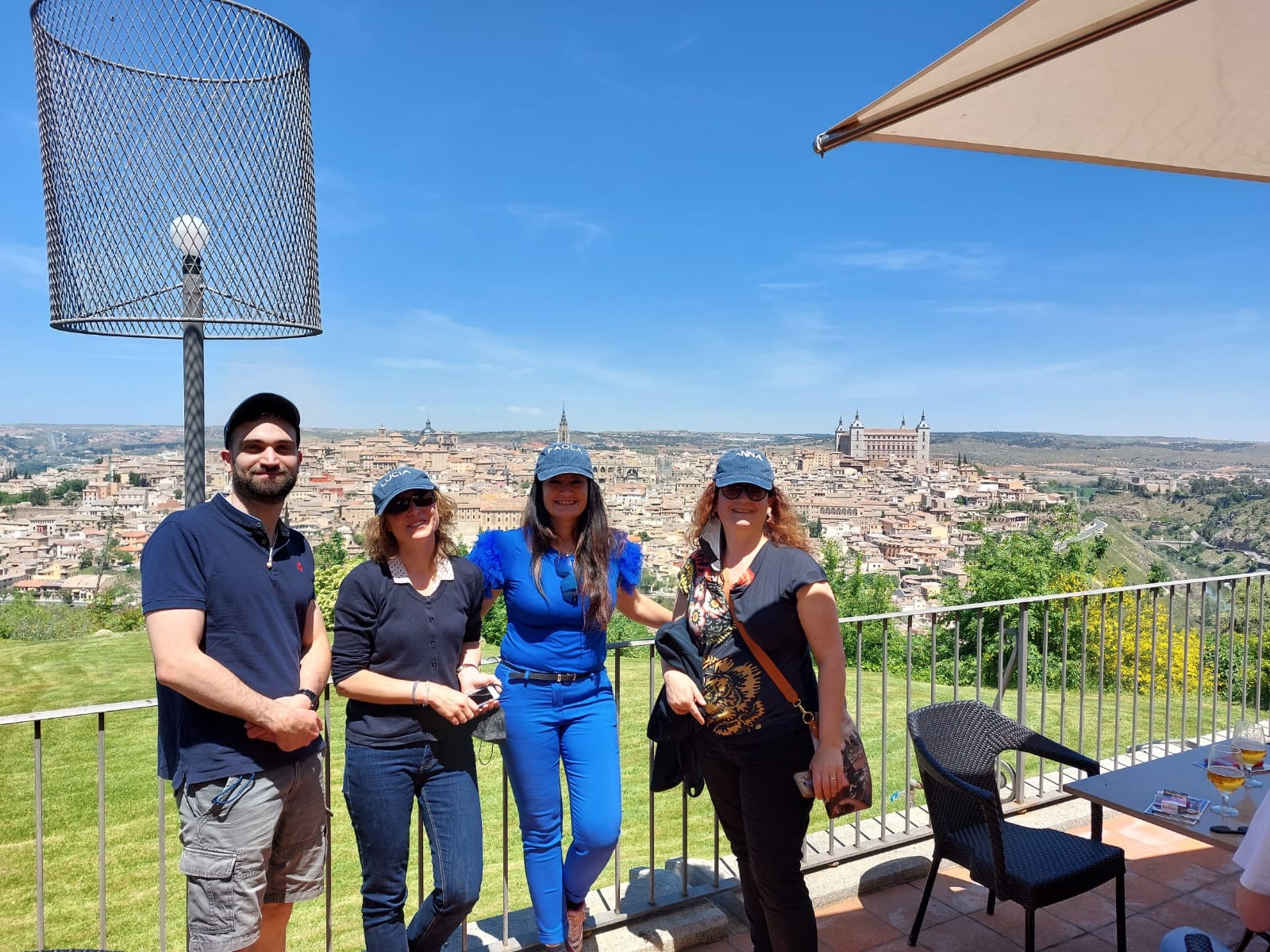
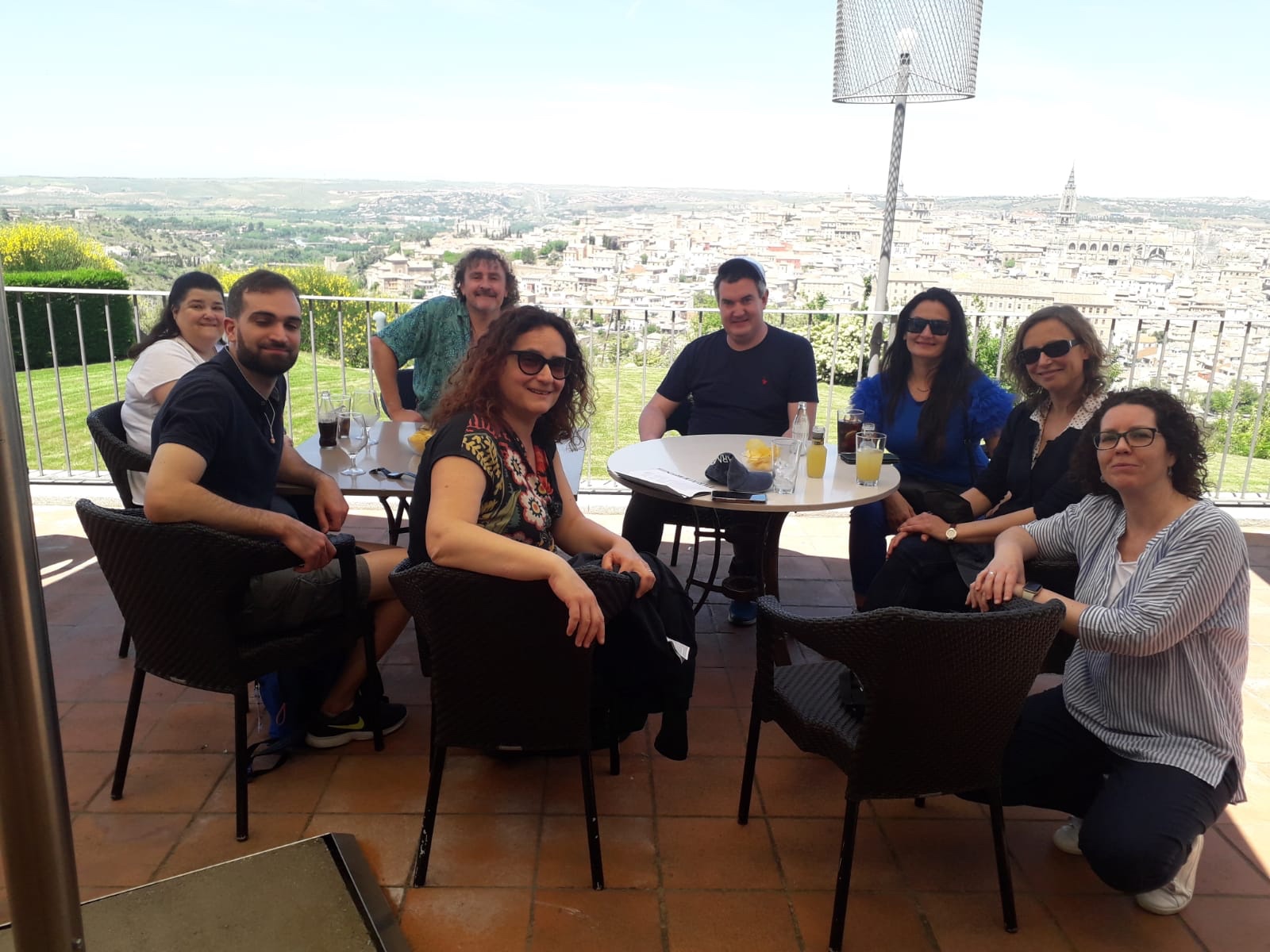
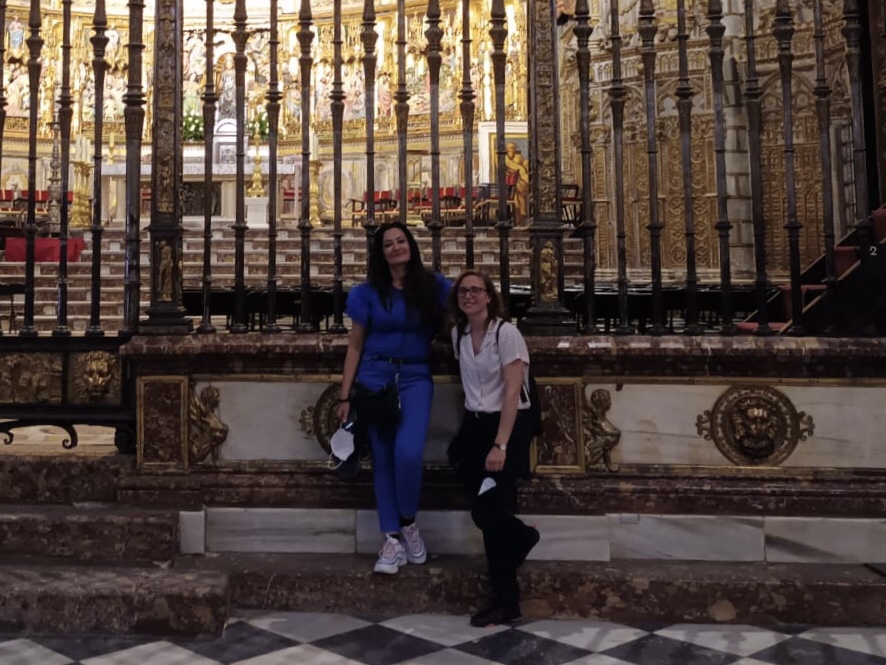
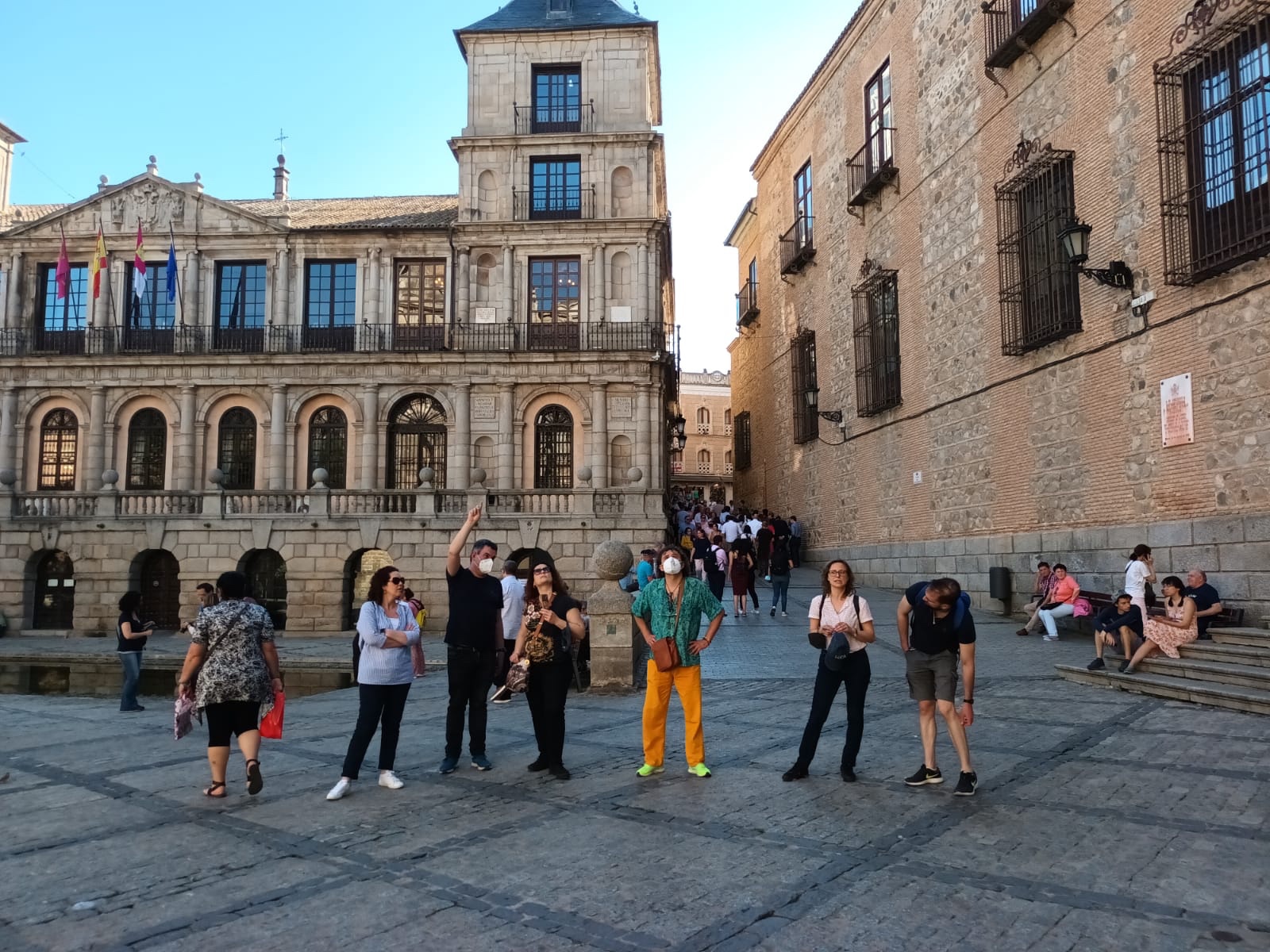
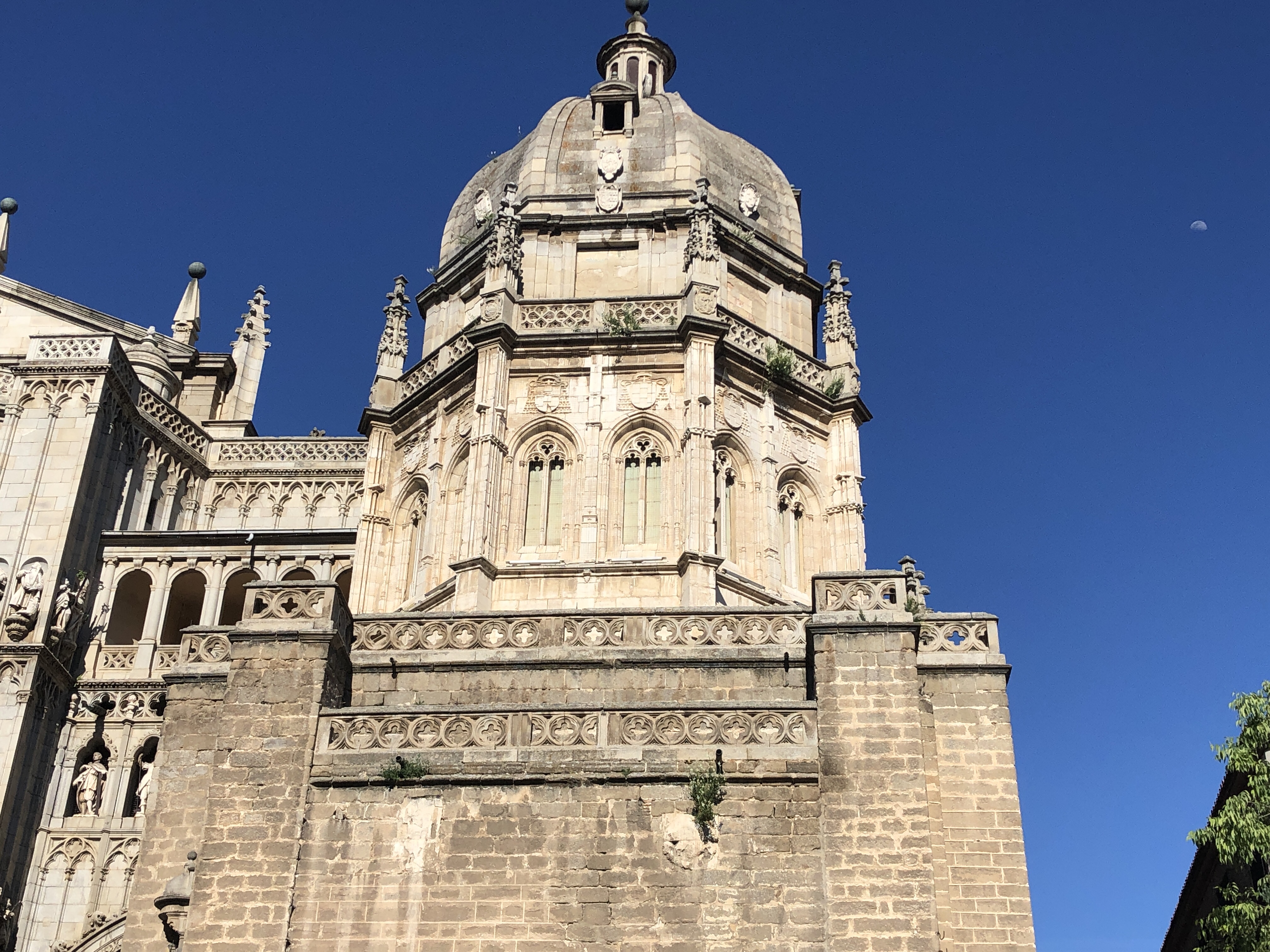
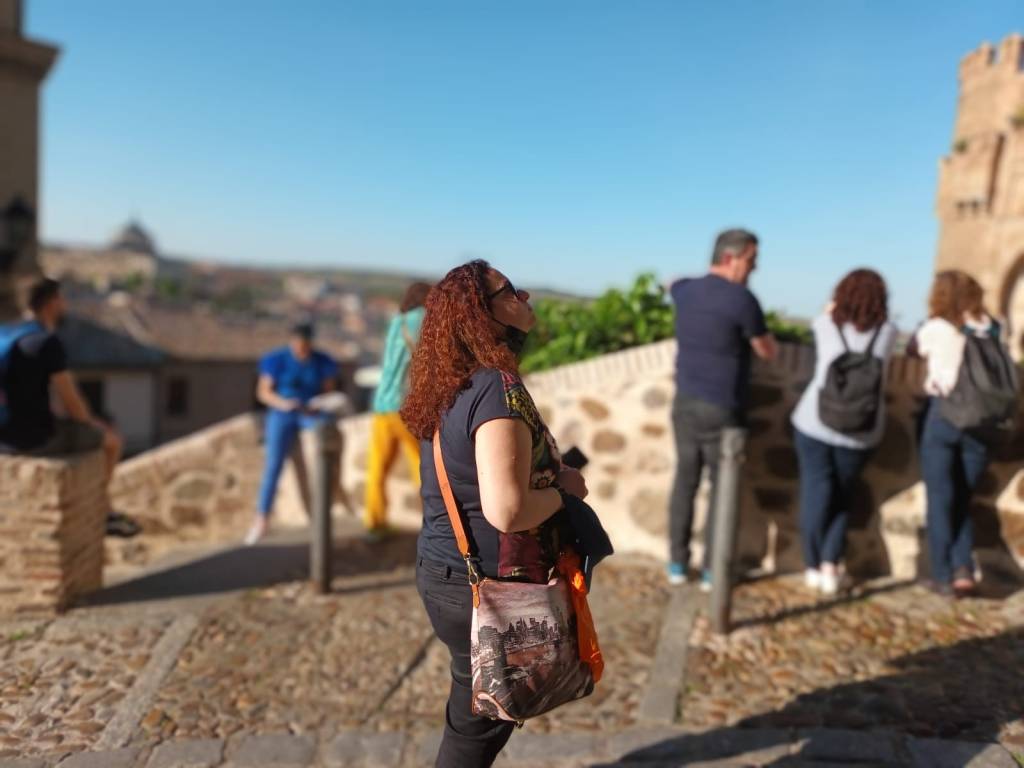
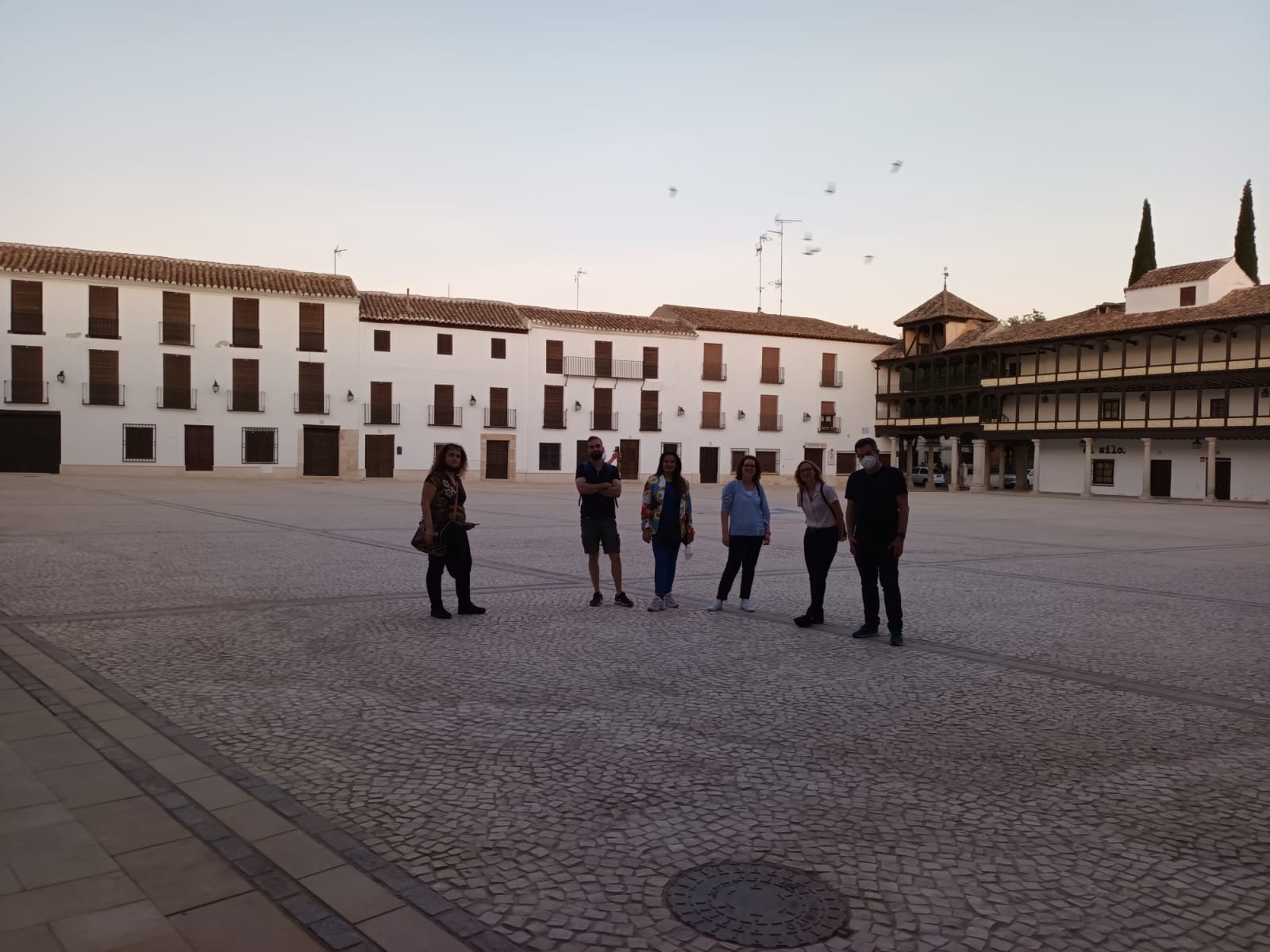
La giornata inizia alle 9:00: siamo accolti nella scuola “IES Enrique de Arfe” da Carmen e Restituto mentre le bandiere dei nostri paesi e dell’Europa sventolano davanti all’ingresso principale in un cielo terso. Carmen, preside della scuola e Resti, referente dei progetti Erasmus e segretario, entrambi al tempo stesso insegnanti di questo istituto, ci guidano all’interno dell’edificio. Ci basta passeggiare nei corridoi silenziosi e colorati per capire quanto gli studenti siano valorizzati e resi protagonisti dei loro apprendimenti. Notiamo una grande attenzione nella gestione dei tempi e degli spazi, con particolare riguardo alle esigenze emerse a causa della pandemia: ingressi scaglionati, segnaletica per regolare i movimenti interni, aule riservate alla gestione dei casi Covid, distanziamento; accorgimenti che permangono, nonostante qui in Spagna non sia più obbligatorio indossare la mascherina a scuola. Sulle pareti risaltano le foto dei gruppi degli studenti alla fine del loro percorso triennale, insieme ai loro insegnanti, il grande cartellone pieno di post it in cui in greco, inglese, francese e spagnolo sono espressi pensieri contro la violenza, l’angolo dedicato alla festa di San Valentino, le sculture e i molteplici progetti cui la scuola ha aderito. Ci sorprende, nell’aula biblioteca, un gruppo di studenti che, accompagnati dall’ insegnante alla chitarra, con flauti e xilofoni esegue il brano “La vita è bella” per accoglierci con una solennità piena di emozione che ci commuove. Segue un intenso “Bella ciao” intonato da Restituto. Terminiamo l’esplorazione con una visita all’orto in cortile e alla palestra in cui alcuni alunni sono impegnati in un’attività inventata per loro dall’insegnante, una staffetta ad ostacoli che deve essere compiuta cercando di schivare i proiettili gommosi lanciati dai compagni avversari disposti in due file per delimitare il percorso. Il collega di educazione fisica ci spiega poi che costruisce molte delle attrezzature sportive che usa (racchette, mazze e spade per la scherma) con materiali da riciclare con la collaborazione degli insegnanti del dipartimento di scienze. Dopo un delizioso caffè nel bar della scuola, cui possono accedere sia docenti che alunni, assistiamo alla lezione di Drama & Dancing: gli studenti hanno allestito uno spettacolo fatto di magie, danze e filastrocche. Si tratta di un corso opzionale, bensì molto frequentato. Nel pomeriggio, dopo un aperitivo con vista sulla bellissima Toledo, ed un pranzo nel ristorante speciale “Escuela de Hostelería” in cui a servirti sono gli studenti stessi (per intenderci come fosse un ristorante gestito da docenti e studenti di un istituto alberghiero), abbiamo visitato la Cattedrale e i monumenti più significativi di questo centro affascinante in cui elementi arabi, cristiani e ebraici si intrecciano in esemplare armonia. Per concludere uno sosta nell’antica Plaza Major di Tembleque del XVII secolo, con il palazzo comunale e su tre lati edifici con un eleganti porticati su tre ordini in pietra e legno, così progettata per essere il centro delle attività della cittadina ma anche per poter fungere da plaza de toros. Olé!
The day starts at 9:00 a.m.: we are welcomed into the school “IES Enrique de Arfe” by Carmen and Restituto while the flags of our countries and of Europe wave in front of the main entrance in a clear sky. Carmen, principal of the school, and Resti, contact person for Erasmus projects and secretary, both at the same time teachers at this institute, guide us inside the building. We only have to walk through the silent and colourful corridors to realise how much the students are valued and made protagonists of their learning. We notice great care in the management of time and space, with particular regard to the needs that have emerged due to the pandemic: alternate entrances, signs to regulate internal movements, classrooms reserved for the management of Covid cases, social distancing; expedients that remain, despite the fact that here in Spain it is no longer compulsory to wear a face mask at school. On the walls lots of things stands out: the photos of the groups of students at the end of their three-year course, together with their teachers, the large poster full of post-it notes in which thoughts against violence are expressed in Greek, English, French and Spanish, thoughts dedicated to Valentine’s Day, the sculptures and the many projects the school has joined. We are surprised, in the library hall, by a group of students who, accompanied by the teacher on guitar, with flutes and xylophones perform the song “Life is beautiful” to welcome us with a solemnity full of emotion that moves us. This is followed by an intense ‘Bella ciao’ sung by Restituto. We end our exploration with a visit to the vegetable garden in the courtyard and to the gym where some pupils are engaged in an activity invented for them by the teacher, an obstacle relay race that must be completed by trying to dodge the gummy bullets thrown by opposing teammates arranged in two rows to mark the route. The PE colleague then explains that he builds much of the sports equipment he uses (rackets, bats and swords for fencing) from recycled materials with the collaboration of the science department teachers. After a delicious coffee in the school cafeteria, which is open to both teachers and pupils, we attend the Drama & Dancing class: the students put on a show of magic, dance and nursery rhymes. This is an optional course, but it is very popular. In the afternoon, after an aperitif with a view of the beautiful Toledo, and lunch in the special restaurant “Escuela de Hostelería” where the students themselves serve you (in other words, like a restaurant run by teachers and students of an hotel-management school), we visited the Cathedral and the most significant monuments of this fascinating centre in which Arab, Christian and Jewish elements intertwine in exemplary harmony. Finally, a stop at the old 17th-century Plaza Major of Tembleque, with the town hall and buildings with elegant stone and wooden arcades on three sides, designed to be the centre of the town’s activities but also to serve as a plaza de toros. Olé!